

A pallet is ready to ship, but the strap slips while being tensioned. The operator starts over, checks the tool, and eventually reaches for another unit. When this happens several times in a shift, the delay extends beyond the packaging station.
Consider replacing the strapping tool when recurring tensioning, sealing, or cutting problems interrupt production, or when the tool no longer fits your strap, loads, or workload. Age alone does not tell you whether a tool needs replacing. Its ability to produce consistent, acceptable results matters more.
Before ordering another tool, identify what is causing the interruptions. Check the tool’s condition, strap compatibility, settings, use, and its power supply. Replacing a tool without checking those factors can leave you with the same problem.
What Are the Signs a Strapping Tool Needs Replacing?
Watch for repeated attempts, rejected joints, and interruptions that have become part of the daily routine.
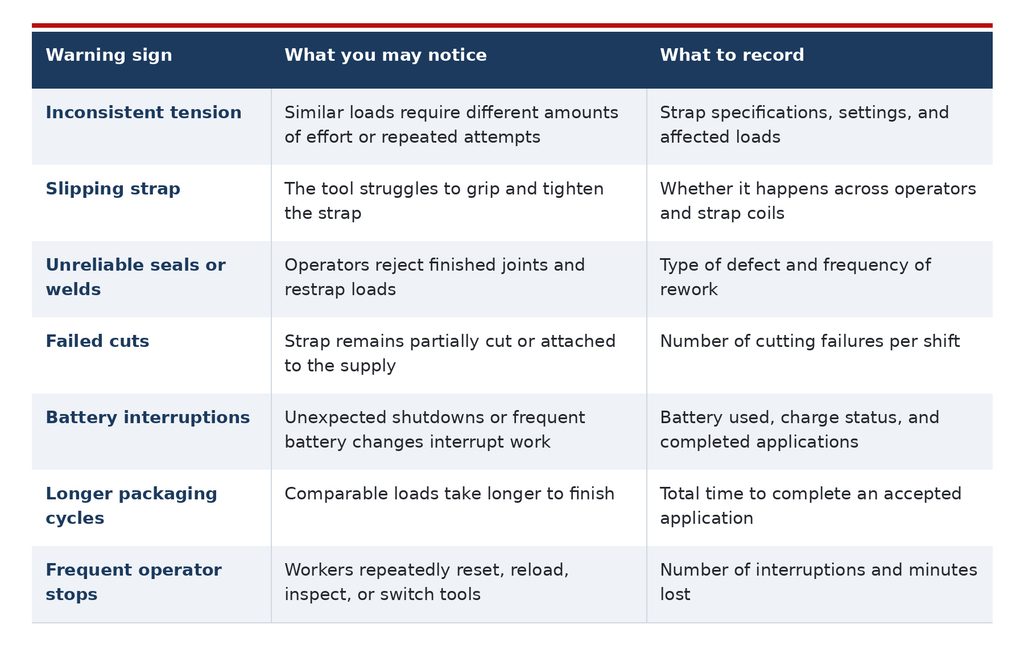
A single failed cut does not mean the entire tool needs replacing. A recurring pattern, especially one that continues after multiple checks, gives you a stronger reason to review your equipment.
What to Check When a Strapping Tool Is Not Holding Tension
Check whether the strap slips during tensioning or loosens after you remove the tool. That distinction helps narrow down what needs checking.
Confirm that the tool supports your strap material, width, and thickness. Then review its condition, settings, and application procedure according to the manufacturer’s instructions.
If the problem started recently, check what changed:
- Strap material, dimensions, or supplier
- Load shape or packaging
- Tool settings
- Application method
Manufacturer specifications define the tool’s compatibility and operating range. For example, the FROMM P329 supports specified sizes of polyester and polypropylene strap and provides adjustable tension.
Do not automatically increase tension to compensate for a loose strap. The setting needs to suit both the strap and the load.
What to Check When Seals or Welds Are Unreliable
Start with the joining method. A manual sealer using metal seals, a steel sealless tool, and a plastic friction-weld tool all have different requirements.
For a seal-based setup, confirm that the strap, seal, and sealer are compatible. Check the tool’s condition and application procedure against the manufacturer’s instructions.
For a friction-weld tool, confirm the approved strap specifications and follow your model’s instructions for strap placement, welding, and cooling. Review the settings for that exact model.
Inspect completed joints according to the manufacturer’s requirements. Correct questionable joints before shipment, and track how often operators need to restrap a load.
What to Check When a Strapping Tool Fails to Cut
A partial or failed cut adds another step to a nearly completed job. Record how often it happens and whether it began after a strap change.
Confirm strap compatibility and have the cutter condition checked according to the manufacturer’s instructions. Track repeated failures alongside other interruptions.
Cutting problems are easy to overlook when operators are accustomed to working around them. Include the extra time and wasted material in your downtime records.
Separate Battery Problems From Tool Problems
If a battery-powered tool repeatedly stops, track which battery pack is being used when the interruption occurs. Note its charge status and whether the same problem occurs with other approved batteries.
That information helps establish whether the interruption follows one battery or remains with the tool.
When comparing replacement tools, account for charging access, spare batteries, and battery changes during the shift. Cordless equipment can suit mobile workflows, but you also need a practical way to keep the tool powered throughout the workday.
Measure What the Interruptions Cost
A few minutes at a time can become a substantial loss over a week.
For example, 15 interruptions lasting two minutes each consume 30 minutes per shift. Over five shifts, that amounts to 2.5 hours of interruption time.
Count only the time employees actually lose. If two employees cannot work during the same 30-minute interruption, that equals one employee-hour lost. Someone who continues other productive work does not add to the lost labor total.
Lost labor cost = total employee-hours lost × fully loaded hourly labor cost
If employees have different labor rates, calculate their costs separately and add them together.
Also track:
- Straps and seals discarded during rework.
- Time spent restrapping rejected loads.
- Delays affecting other packaging stations.
- Overtime or missed shipping deadlines attributable to the problem.
Keep these costs separate so you do not count the same time twice.
Compare the results with the cost of a suitable replacement, including any batteries, chargers, seals, or other equipment needed for the new setup.
When to Consider Replacing Your Strapping Tool
Replacement becomes a stronger option when recurring failures continue after manufacturer-recommended checks, the tool cannot handle your current strap or required tension, or its normal operating pace no longer meets production needs.
A single worn component or battery problem may not justify replacing the entire tool. Persistent rework, incompatible specifications, or an ongoing production bottleneck can justify choosing another model.
The Tool May No Longer Fit Your Application
A tool can still operate and be poorly matched to the work.
Perhaps you bought it for occasional bundles, but now use it throughout the shift. Your loads may have changed, or you may be using a different strap. Operators may also spend too much time switching between separate tools.
Before replacing the existing model with an identical unit, review these requirements:
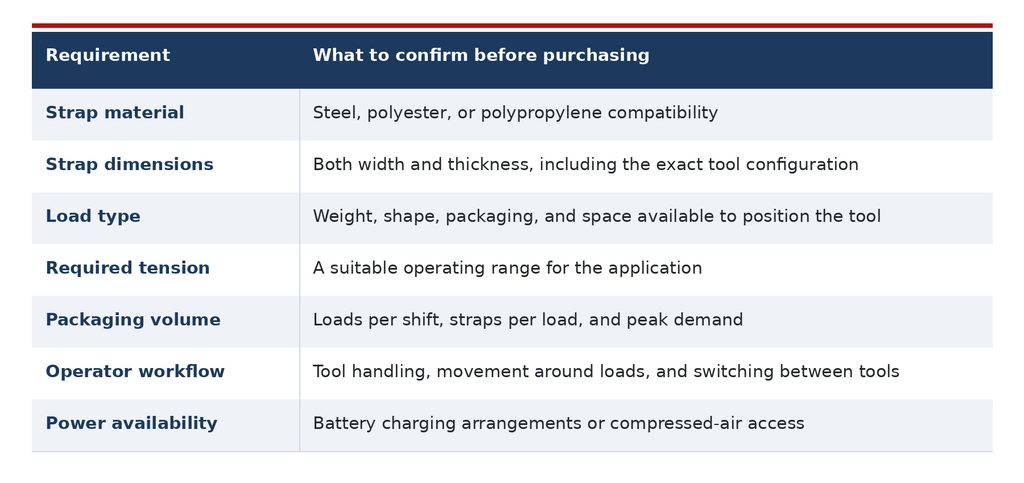
The maximum advertised tension is only one part of the comparison. The tool should also fit the strap, joining method, load, and operator’s working position.
Manual, Pneumatic, or Battery-Powered?
Our packaging strapping tools include manual, pneumatic, and battery-powered options for steel and plastic applications, along with tensioners, sealers, combination tools, and dispensers. Compatibility varies by model.
Manual Tensioners and Sealers
Manual tools are a practical choice for occasional strapping or packaging work that moves at a manageable pace. They do not require charging or compressed air. Time the complete application, including positioning the strap and switching between tools. That gives you a useful basis for comparing a manual setup with a compatible combination tool.
Pneumatic Tools
A packaging station with compressed air is a good fit for a pneumatic tool, particularly for demanding, repetitive work. Check the model’s air requirements and make sure the hose can reach each working position.
Load shape also matters. The FROMM A480 steel strapping tool is suitable for bars, pipes, coils, and small bundles. Match the tool to the actual load as well as the available power source.
Battery-Powered Friction-Weld Tools
For operators who move between pallets or packaging stations, cordless handling can make a battery-powered friction-weld tool a useful option for compatible plastic strapping. Confirm the approved strap material, dimensions, and tool configuration before ordering. Include charging access and spare batteries in your setup so battery changes fit the shift’s workload.
Combination Tools and Dispensers
Combination tools bring tensioning, joining, and cutting into one unit. We also supply dispensers to keep strapping accessible at the work area. Observe the full packaging cycle. Time spent retrieving strap or moving between stations may point to a workflow problem as well as a tool problem.
Get Help Choosing Your Replacement Tools
A useful replacement solves the recurring problem and fits the work you need to complete now.
Contact Champion Strapping with your strap material, width, and thickness, load type, required tension, production volume, and current application method. Include your tool model, the interruptions you are experiencing, and whether battery charging or compressed air is available.
If you don’t have every specification, send the information you do have.
We can help identify a replacement tool suited to your materials, loads, and packaging workflow.